Neurotechnology
I believe neurotechnology could become one of our most powerful levers for reducing human suffering and increasing human flourishing. We already have early evidence that targeted interaction with the brain can radically improve the human condition. My current work at ARIA is focused on the next problem: building neurotechnologies that can transform people’s lives at scale.
There are two reasons I think neurotechnology will be so consequential:
- Brain and nervous-system disorders are now the leading cause of ill health and disability worldwide. In Europe and the United States alone, the annual economic cost of neurological disorders has been estimated at approximately $1.7 trillion.1
- Targeted interaction with the human nervous system can already produce profound therapeutic effects. Neuromodulation can improve symptoms in otherwise intractable neurological and neuropsychiatric conditions. Brain–computer interfaces are beginning to restore communication. Cell and gene therapies offer the possibility of repairing dysfunctional neural circuits.
The starting point for much of my work is that our current paradigm of neurotechnology will not scale to reach the people who need it most.
We can see this in one of our most established neurotechnologies: deep brain stimulation for Parkinsonian tremor. In the United States, DBS has been approved for more than two decades, has high response rates in appropriately selected patients and has an established reimbursement pathway. Yet it remains at least an order of magnitude underpenetrated relative to plausible eligibility.
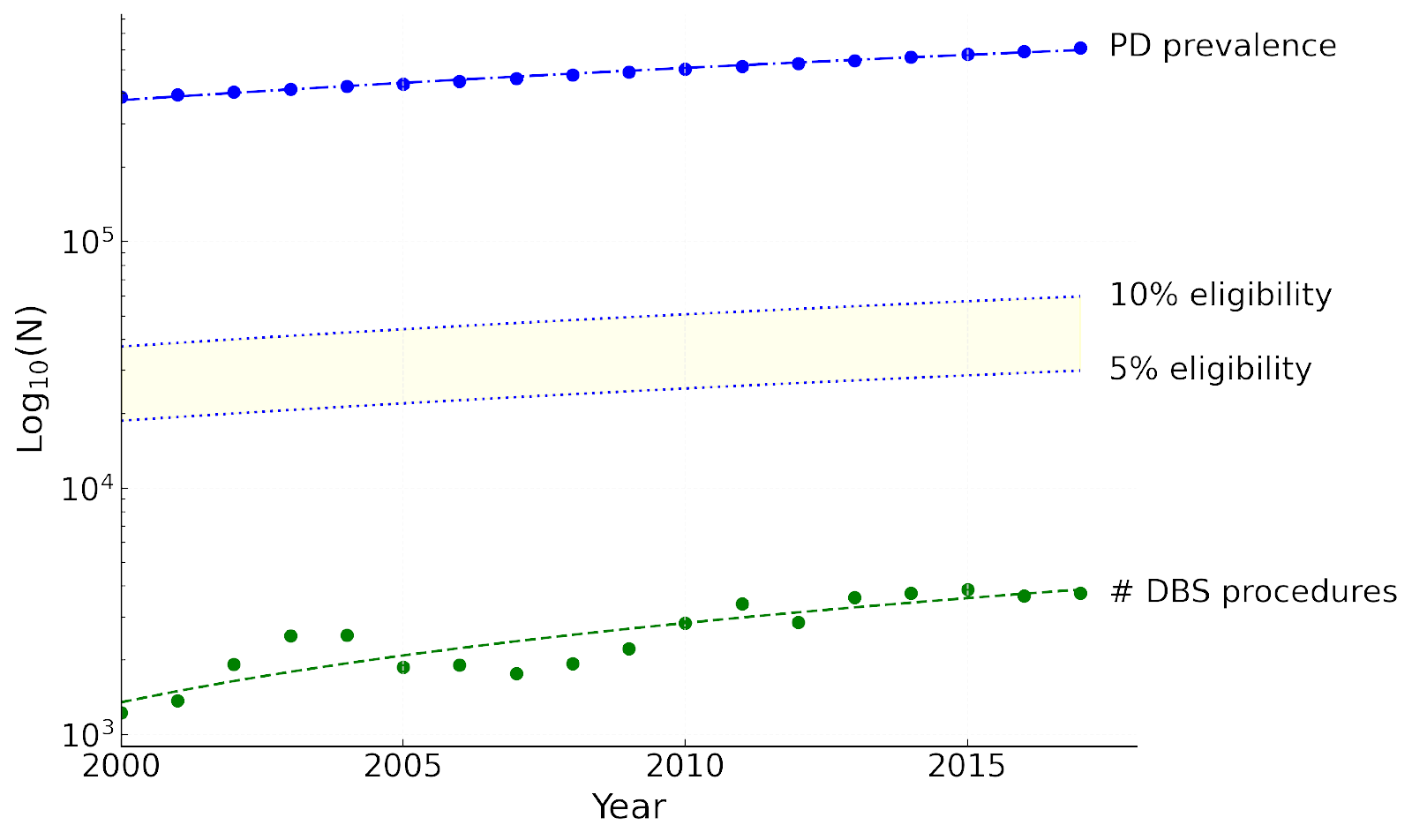
If this is true even for one of our most established neurotechnologies, entirely new approaches for emerging indications will fare even worse.
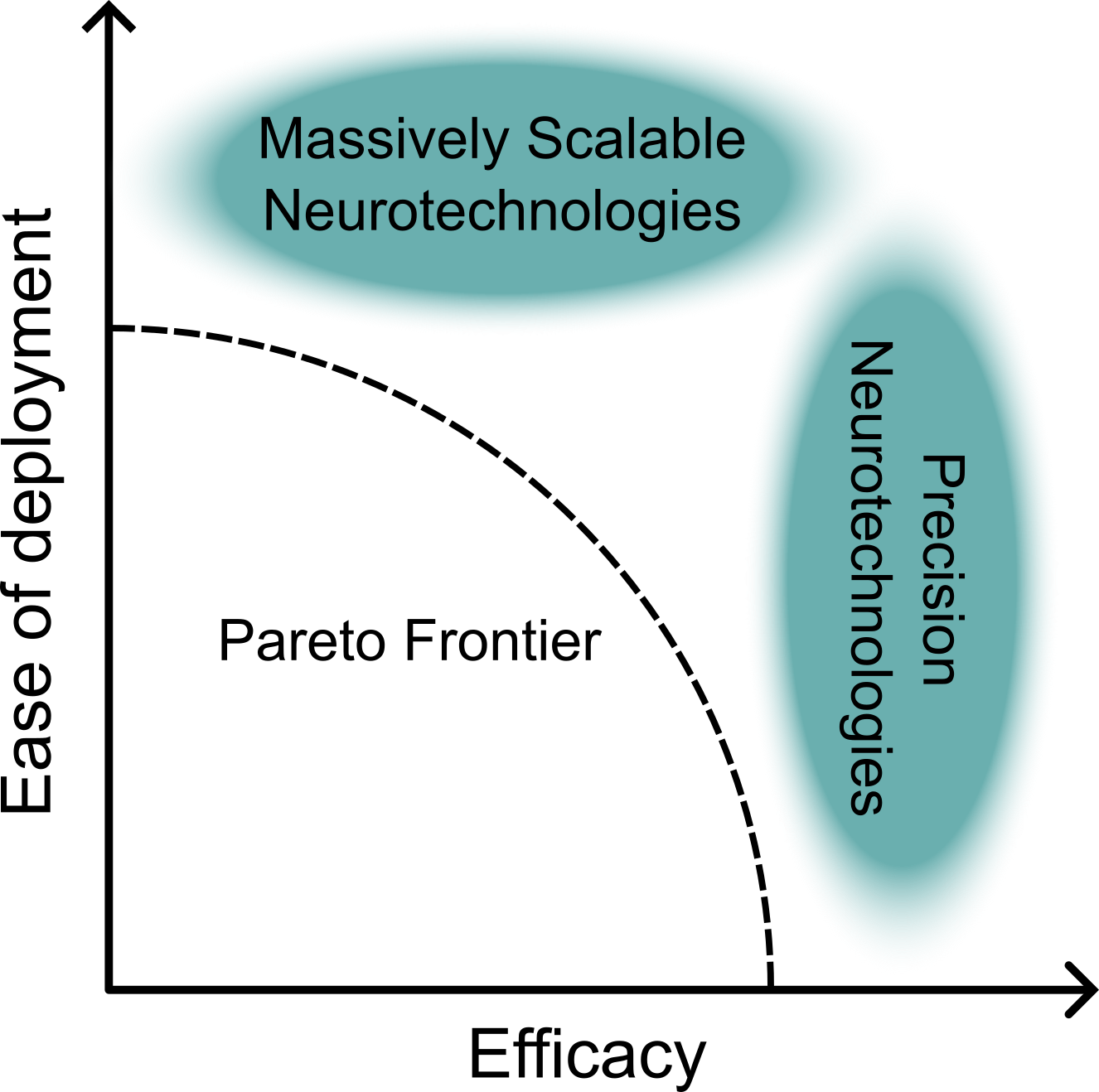
I find it helpful to think about how new interventions reach the world along two axes. The first is capability: how effectively can an intervention modify a given disease state (in terms of the magnitude, reliability and durability of its effect)? The second is deployability: how easily can an intervention be delivered and maintained? Many interventions require complex surgical procedures which create a series of stacked, multiplicative barriers.
Technologies can reach many people because they are exceptionally easy to deploy2, or they justify a significant procedural burden because their effects are sufficiently large3. Ideally they are both easy to deploy and highly effective4.
I think the most important advances in neurotechnology will therefore come from pushing this Pareto frontier: producing much greater therapeutic capability while radically reducing the burden of delivery. That is the frontier I am trying to move with my work at ARIA.
To do this, I have designed, built and now lead two coordinated research programmes at the Advanced Research and Invention Agency (an ARPA for human flourishing). The Precision Neurotechnologies programme aims to build significantly better circuit-level neural interfaces (increasing the efficacy) and the Massively Scalable Neurotechnologies programme aims to develop technologies that can access the brain without transcranial surgery (reducing the procedural burden). We currently fund about 30 teams with more than £120M to realise this vision.
Further reading & watching
- Precision Neurotechnologies Programme Thesis, J. Carolan, ARIA (2024)
- Massively Scalable Neurotechnologies Programme Thesis, J. Carolan, ARIA (2025)
- Massively Scalable Neurotechnologies, J. Carolan, ARIA Substack (2025)
- Massively Scalable Neurotechnologies, Foresight Institute (2025)
- Protocol Labs BCI Roadmap Series, Protocol Labs (2026)
V. L. Feigin, “The Evolution of Neuroepidemiology: Marking the 40-Year Anniversary of Publishing Studies on Epidemiology of Neurological Disorders”, Neuroepidemiology 56, 2–3 (2022). ↩︎
Americans filled approximately 136 million SSRI prescriptions in 2024. ↩︎
Approximately 1.3 million total hip and knee replacements are performed in the US each year. ↩︎
Around one in eight US adults reported currently taking a GLP-1 medication in 2025. ↩︎